
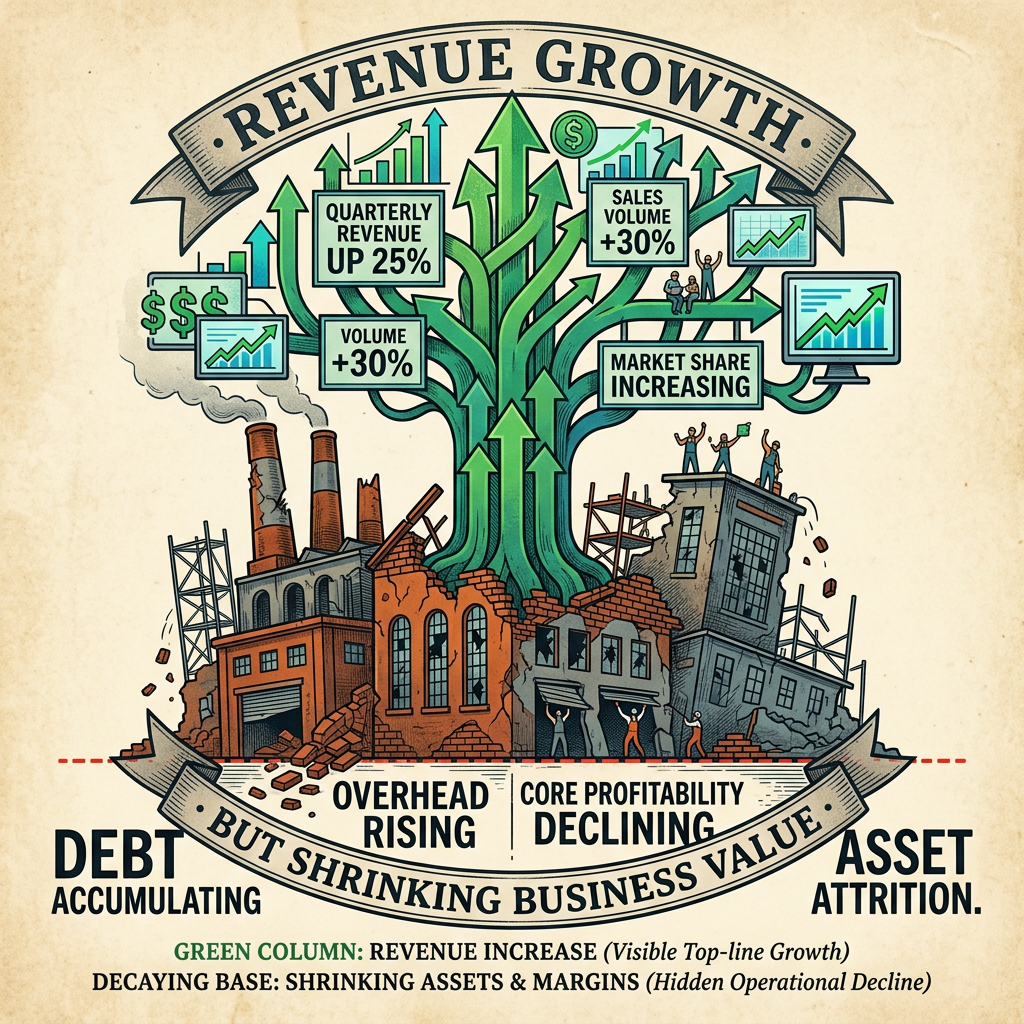
It sounds counterintuitive.
But I’ve seen businesses grow revenue significantly while becoming less profitable, more cash constrained and more highly leveraged.
For example:
Revenue ↑ 25%
Sounds great.
But what if:
→ Gross margin ↓
→ Customer acquisition costs ↑
→ Working capital ↑
→ Debtor days ↑
→ Subcontractor costs ↑
→ Capex ↑
→ Debt ↑
→ Cash flow ↓
The business is bigger.
But is it better?
That’s the question business owners should be asking.
I prefer to think about the quality of growth, not simply the amount of growth.
Before committing capital to expansion, I would want to understand:
1. What is driving the revenue growth?
Is it sustainable or dependent on one-off opportunities?
2. What happens to margins?
More revenue at lower margins can destroy value.
3. How much additional working capital is required?
Growth can consume cash surprisingly quickly.
4. What additional capital expenditure is required?
More sales may require more people, equipment, vehicles, premises or technology.
5. What happens to EBITDA and cash flow?
Ultimately, growth needs to translate into sustainable earnings and cash generation.
6. What does it do to the balance sheet?
The right growth strategy should strengthen the business, not simply increase its debt.
The objective isn’t to avoid growth.
It’s to make sure that growth creates value rather than just making the business larger.
That is why I believe business strategy, financial performance and funding strategy should be considered together.
Before asking “How much can we borrow?”, ask “What will this growth actually create?”
#BusinessGrowth #BusinessStrategy #CapitalStrategy #CorporateAdvisory #BusinessFinance #EBITDA #CashFlow #CharteredAccountant


Leave a Reply