
A business can grow revenue by 20%, report higher EBITDA — and still find itself under increasing financial pressure.
Why?
Because growth often requires cash before the benefits of that growth arrive.
More sales can mean:
→ More inventory
→ More work in progress
→ More receivables
→ More people
→ More equipment
→ More premises
→ More working capital
→ More debt
So the question shouldn’t simply be:
“How much are we growing?”
It should be:
“What does that growth require us to invest, and what are we getting in return?”
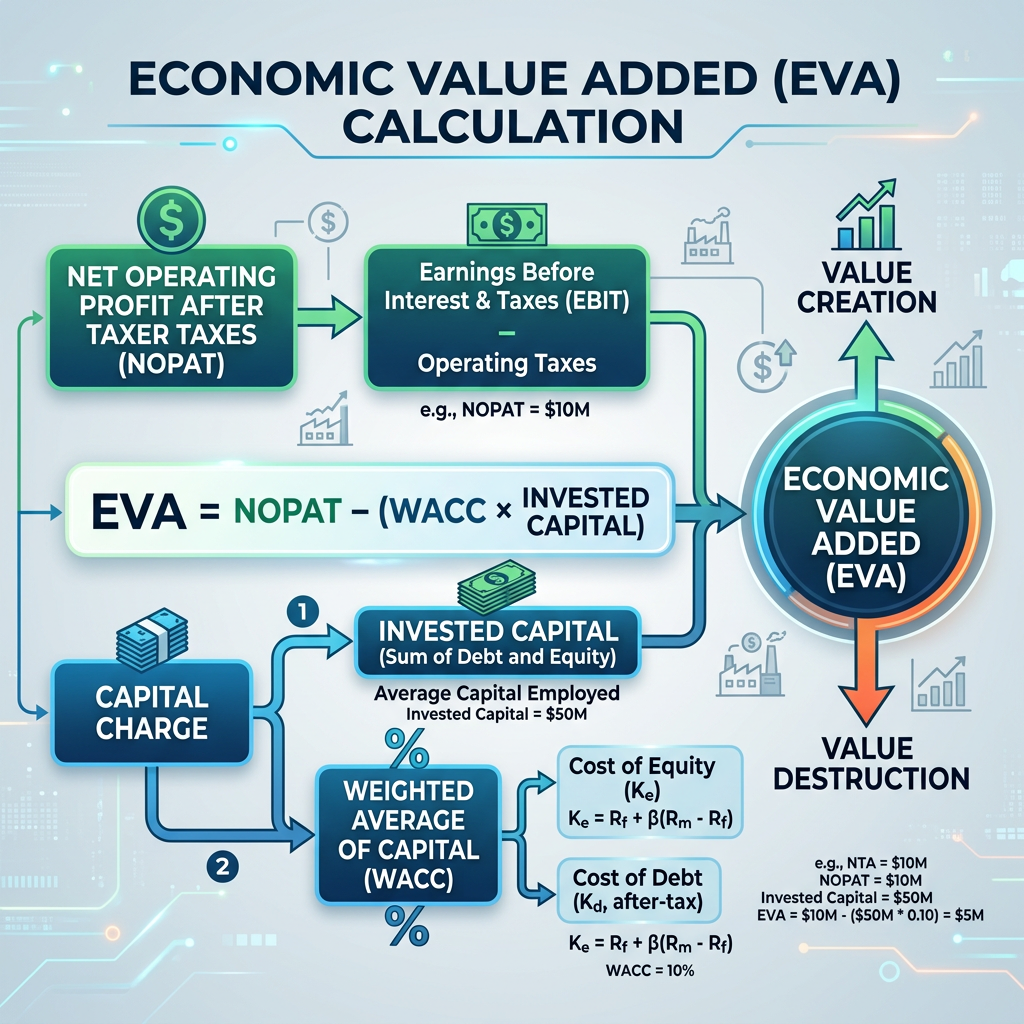
This is where I find the concept of Economic Value Added (EVA) useful.
At its simplest:
EVA = NOPAT − (Invested Capital × Cost of Capital)
In other words:
Are we generating enough Net Operating Profit After Tax (NOPAT) to compensate for the capital employed in the business?
Consider two businesses.
Both grow revenue from $50m to $60m.
But:
Business A generates strong incremental margins with relatively little additional capital.
Business B requires significant additional inventory, receivables, equipment and debt to achieve the same growth.
The revenue growth is identical.
The economics aren’t.
This is why I believe growth decisions should be evaluated through three lenses:
1. PROFITABILITY
What incremental profit does the growth generate?
2. CAPITAL
How much additional capital does it require?
3. CASH FLOW
How quickly does that investment convert back into cash?
A fourth question then becomes particularly important:
Does the return generated exceed the cost of the capital required to achieve it?
That’s the difference between simply growing a business and creating value through growth.
And sometimes the most valuable decision isn’t finding another 20% of revenue.
It is finding the 20% of revenue that creates the most value for every dollar of capital invested.
#BusinessGrowth #ValueCreation #CapitalAllocation #CashFlow #CorporateAdvisory


Leave a Reply